
Last updated November 20, 2026
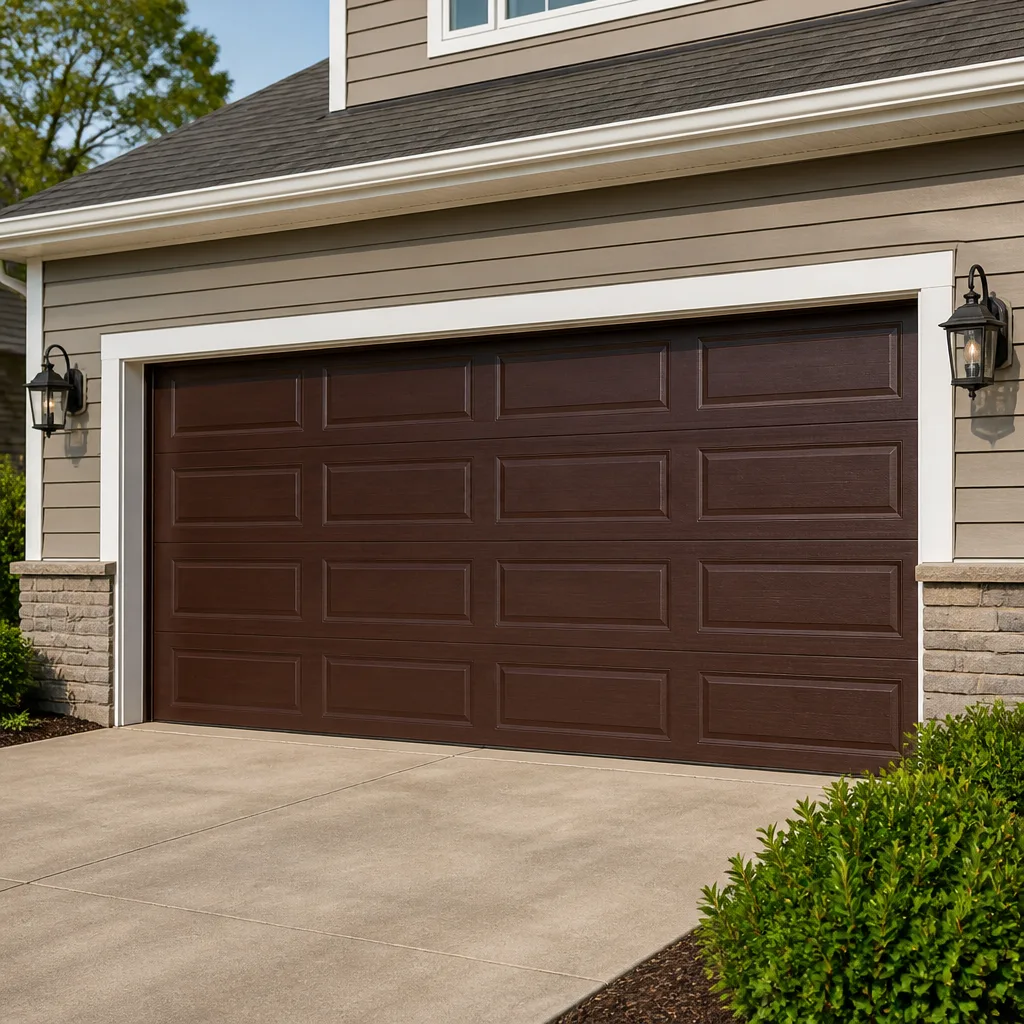 Raised-panel steel
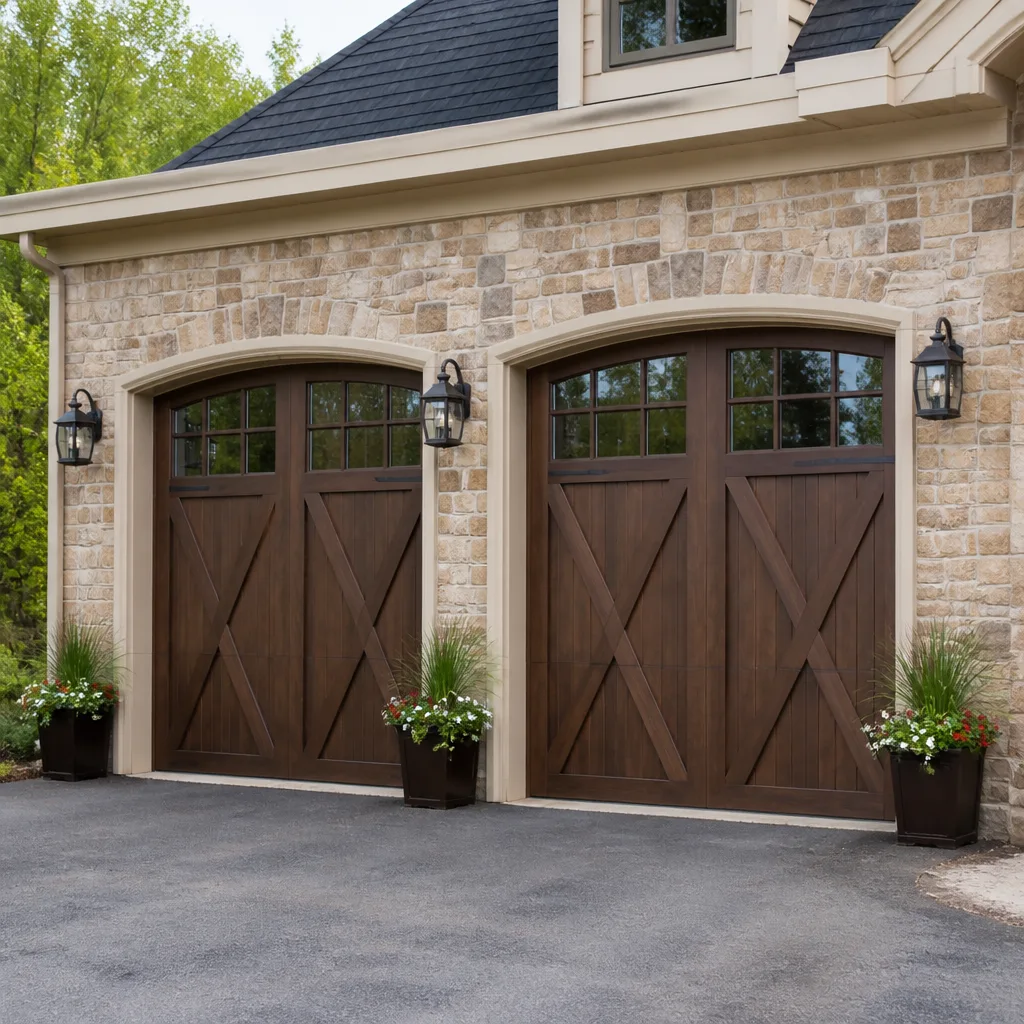 Carriage house
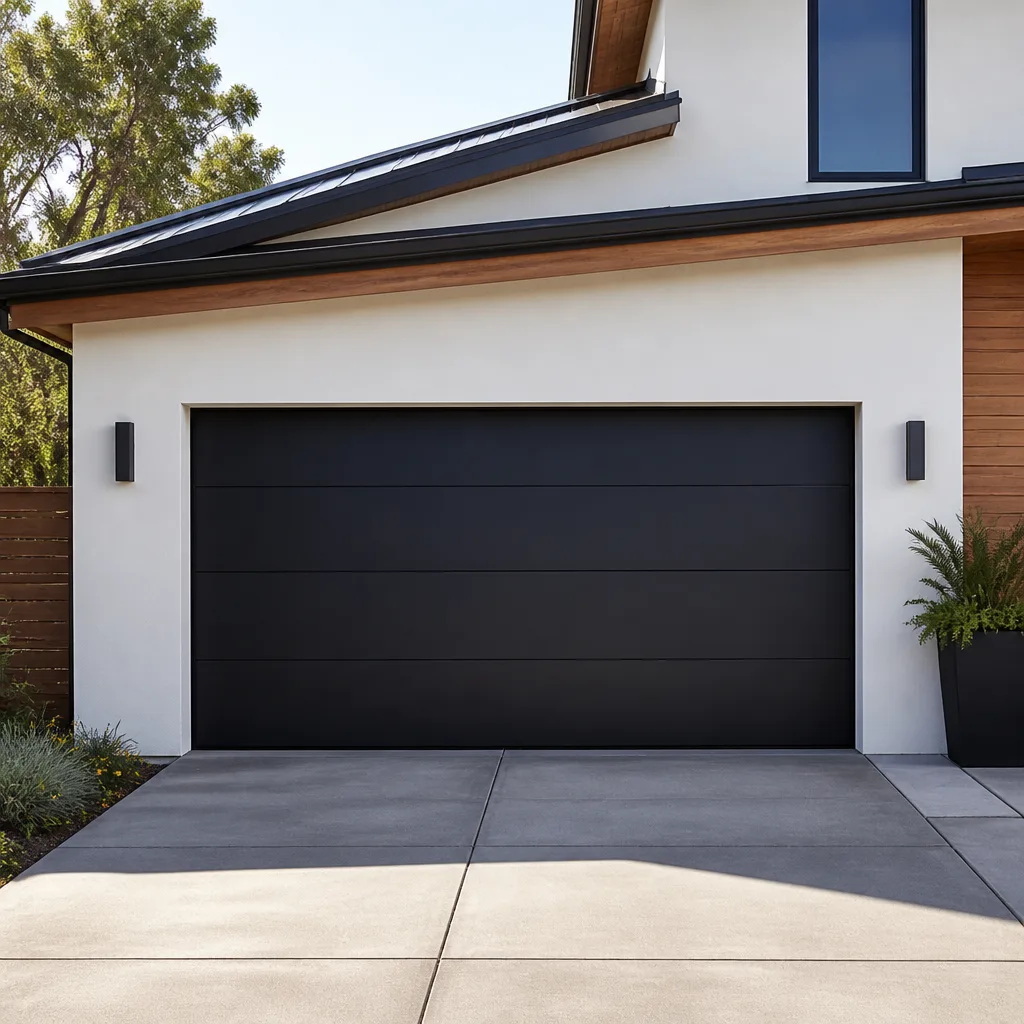 Modern flush
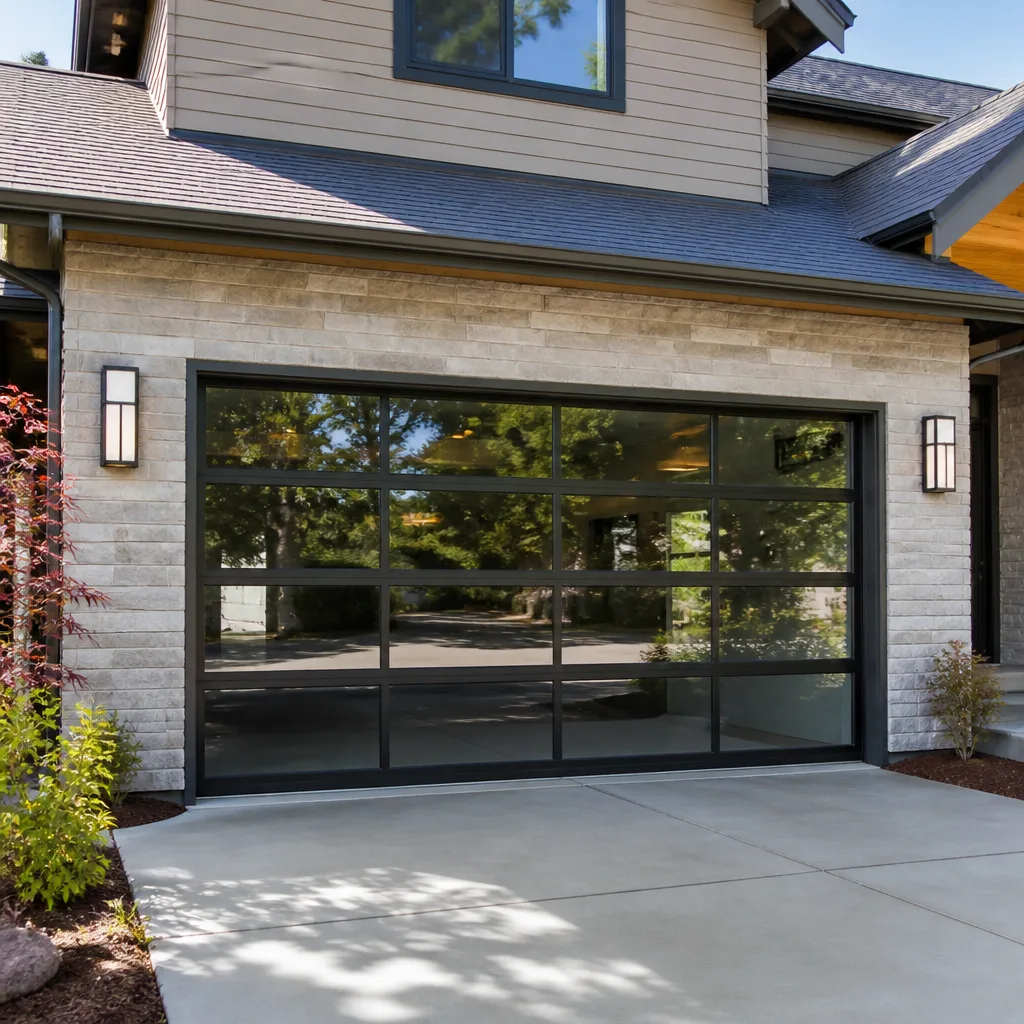 Full-view glass
 LiftMaster openers
 Chamberlain openers
Full 25-point door and opener safety check with every visit - springs, cables, rollers, tracks, and your LiftMaster or Chamberlain opener included
You get a price before we start. It does not change when the pro arrives.
Get your free estimateGarage Door Warning Signs: A Burien Homeowner’s Reference Guide
A garage door that’s slightly off-balance will wear out an opener motor long before the door itself ever fails. The telltale sign is subtle: the door takes a beat or two longer to open than it did a few months ago, or it hesitates at a certain height before catching up. Almost nobody notices that, so the motor keeps working harder than it should until it gives out. In this guide we’ll decode the sounds, movements, and visual cues that actually mean something, ranked by urgency, so you know what to fix today and what can wait until next month. We’ll also cover the quarterly checks worth running on any Burien door.
Quick Answer
The warning signs that matter most on a garage door are a door that’s off-balance or reverses on its own, a grinding, popping, or scraping noise that wasn’t there before, a cable that’s frayed or coiled into a bird’s nest, and weatherstripping that’s pulling away from the frame. Of those, an off-balance door and a broken spring are the urgent ones, because both put stress on the opener and the rest of the hardware every time the door cycles. Cosmetic issues with seals and paint are worth watching but rarely need same-day attention.
Styles & brands we work with
- Raised-panel steel
- Carriage house
- Modern flush
- Full-view glass
- LiftMaster openers
- Chamberlain openers
Table of Contents
- What the Four Main Noises Tell You: Grinding, Popping, Scraping, Clicking
- Reading Your Cables: Fraying, Slack, and the Bird’s Nest Coil
- The Quarterly Balance Test Every Burien Homeowner Should Run
- When a Reversing Door Is a Safety Feature and When It’s a Symptom
- Weatherstripping Failure: Why a Cosmetic Gap Becomes Structural
- Ranked by Urgency: What to Fix Today vs. What to Watch
- Common Mistakes to Avoid
- When to Call a Professional
What the Four Main Noises Tell You: Grinding, Popping, Scraping, Clicking
Most homeowners describe a bad door as “noisy,” which doesn’t tell us much. In our experience, the specific sound points to a specific system, and that distinction saves a lot of guessing. Here’s how we break it down when a Burien customer calls and describes what they’re hearing.
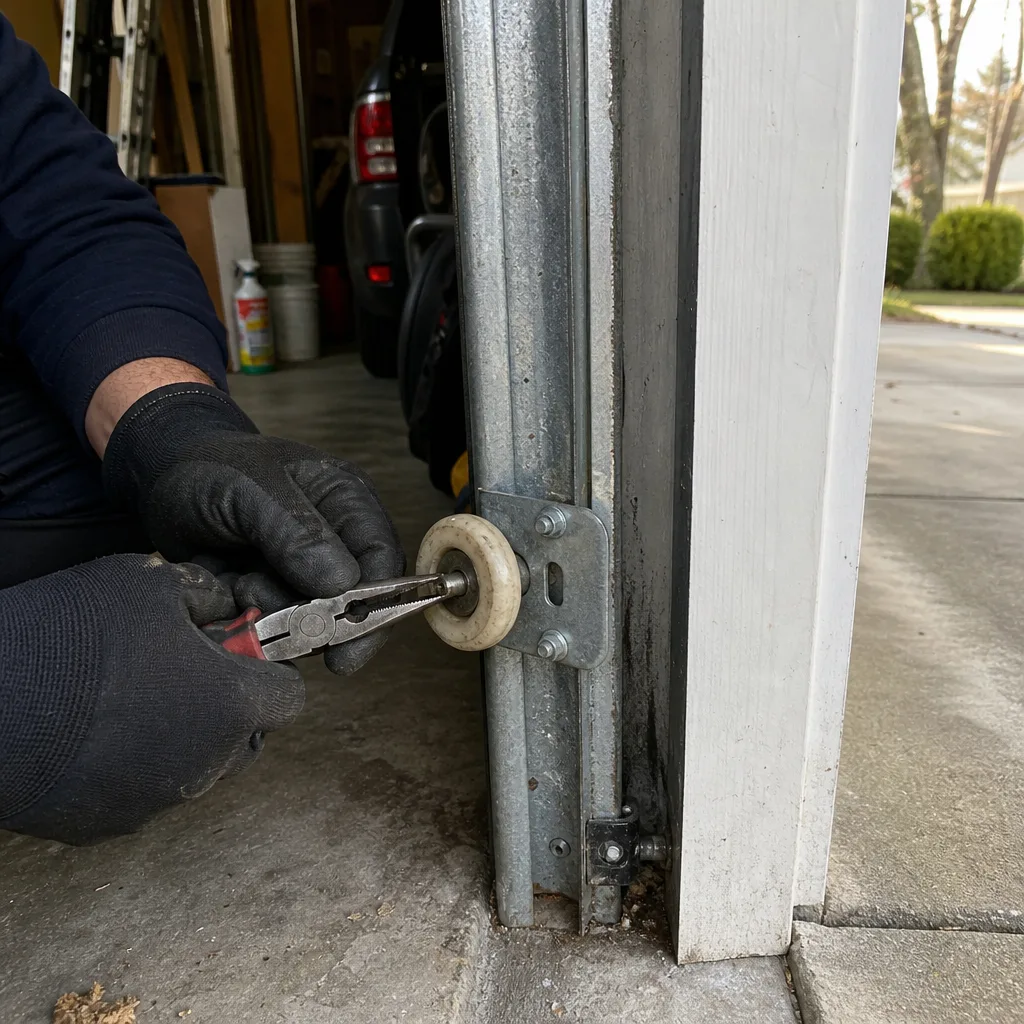
Grinding usually comes from the track-and-roller interface. Rollers that have dried out, flat-spotted, or gotten grit in the bearings will drag against the track and make a low, continuous rumble. You’ll often hear it change pitch as the door passes the same spot. A little lubrication sometimes quiets it, but if the rollers are visually worn flat on one side or the bearings are shot, replacement is the fix. On a Clopay or Amarr steel door, worn rollers are one of the most common service calls we get.
Popping is the one that deserves attention right away. A pop or snap when the door starts to move usually points to a torsion spring that’s under load and not distributing tension evenly. It can sometimes mean a spring is beginning to wind down unevenly, or that a coil has already cracked. Don’t keep cycling the door to “see if it does it again.” Stop, look, and call.
Scraping suggests the door panels are misaligned or rubbing the track, or that a hinge or roller stem has bent. This one often shows up after a panel has been bumped by a car, or on older doors where the hinge plates have loosened. Left alone, scraping wears the track itself, which turns a small hinge job into a bigger repair.
Clicking almost always points to the opener, not the door. A repeated click at the start of a cycle usually means a stripped opener gear or a failing limit switch. On Genie and Chamberlain openers this is a familiar pattern, and it’s usually a quick diagnosis once we’re on site. The door itself is fine; the opener is the one struggling.
If you can describe the sound in these terms when you call, you’ll get a much more useful first conversation than “it’s making a weird noise.”
Reading Your Cables: Fraying, Slack, and the Bird’s Nest Coil
Garage door cables are the most misunderstood part of the whole system. They’re under high tension, they run behind the springs, and they fail in a couple of distinct ways you can spot from the ground without touching anything.
First, the normal state. A healthy cable runs taut and straight through its pulleys with a small, even amount of play at the drum end. It’s a braided wire rope with a smooth, unbroken surface. That’s what you want to see.
Now the failure modes:
- Single-strand fraying: Look for a thin wire sticking out sideways from the main bundle, almost like a stray hair. One broken strand is a warning; several broken strands means the cable is close to failing and the door should not be cycled until it’s inspected.
- Bird’s nest coil: If the cable has spooled off its drum and coiled into a loose, tangled mass, that’s a serious failure. It usually happens after a spring has snapped or the door has been forced manually. Do not try to unwind it yourself; a cable under sudden release can whip and cause injury.
- Uneven slack: If one side of the door has noticeably more slack than the other, a drum may have jumped a spool or a spring may be relaxing unevenly. The door shouldn’t be operated until it’s checked.
- Rust or kinks: Small rust flecks or a kink in the run are early signs the cable is stretching beyond spec. Kinks weaken the strand, and the door becomes more likely to fail under normal use.
We always tell Burien customers the same thing: check from the ground, never reach up and touch the cables or springs to “see how loose” they are. Those parts are under thousands of pounds of tension, and they can release without warning. That’s also why we handle spring and cable work ourselves rather than coaching homeowners through it. If you suspect a cable issue, the right call is to stop using the door and have it looked at by someone equipped for high-tension hardware.
For a closer look at cable and spring work specifically, our guide to garage door spring repair covers the parts and the process in more detail.
The Quarterly Balance Test Every Burien Homeowner Should Run
This is the single most useful check you can run on your own door, and it takes about sixty seconds. Running it once every three months will tell you more about the health of your springs and opener than any visual inspection.
Here’s how it goes:
- Disconnect the opener. Pull the emergency release cord (the red handle hanging from the carriage) so the door is running on its springs and tracks alone. If you’re not sure your opener is disconnecting properly, do this test only when a technician is out.
- Raise the door to about waist height by hand. Lift slowly and let go. A well-balanced door should stay roughly where you let it go, with maybe a slight drift.
- Try the same at half-open and three-quarters open. The door should stay put or drift only a few inches over several seconds.
- Lower carefully and reconnect the opener. Reengage the carriage, then cycle the opener once to confirm everything is back in sync.
What passes: The door stays put at each height, or drops slowly and evenly. It doesn’t slam, doesn’t shoot upward, and doesn’t resist you lifting it.
What fails: The door drops fast, requires real force to lift, or slams down from the halfway point. All three point to spring tension problems. A door that falls fast means the springs are losing lift capacity, which overworks the opener and stresses the cables. A door that’s hard to lift means tension is too high, which can wear the spring and the hinges.
What a failed test means for spring life: Torsion springs are rated for a specific number of cycles, and once they start losing lift the door is nearing the end of that spring’s service life. It often isn’t an emergency, but it’s the signal to schedule a maintenance visit or spring replacement before the spring snaps at an inconvenient moment. If the door has already stopped lifting entirely or you’ve heard a loud bang from the garage, don’t run the test; just call.
One note specific to Burien: doors on homes close to the downtown core or in the neighborhoods around Seahurst and Three Tree Point tend to see more use than a door on a quiet corner lot, simply because more people use the garage as the main entry. More cycles means faster spring wear, so those doors benefit from the quarterly test more than most.
When a Reversing Door Is a Safety Feature and When It’s a Symptom
A door that stops and reverses when it touches something is doing exactly what it’s supposed to. That’s the safety reverse system working, and it’s the reason a garage door is one of the few things in your house that can sense an obstacle and back off. If your door reverses when it contacts an object, its safety system is intact.
The symptom is when the door reverses without touching anything. Here’s how to tell whether it’s a safety system issue or a spring or limit problem:
- Reverses at the same height every time, no contact: This usually means the opener’s limit switch is set wrong, or the safety sensors at the floor are misaligned or have a dirty lens. A quick look at the sensor LEDs (on most Chamberlain and Genie openers) will tell you if one is blinking, which points to alignment or obstruction.
- Reverses at different heights, especially lower down: That points toward a spring that’s lost tension or a door that’s binding in the track. The opener is likely sensing resistance and treating it as an obstacle. This is the one to take seriously. A door that’s binding on its way down is at higher risk of coming off the track.
- Reverses immediately after closing, or won’t stay closed: Check the safety sensor alignment first. If both sensors are lit and aligned, the opener’s travel limits or force settings may be off.
- Reverses only when it’s colder: A door that struggles in cold weather is often telling you the springs are tired, or that the metal in the tracks has contracted enough to bind. South King County gets a real cold snap most winters, and a door that worked all fall can suddenly act up.
The safety reverse is not something to disable or adjust casually. It’s wired to the opener’s logic and it’s the main thing standing between a garage door and an injury. If you suspect a reversing door is a spring or travel-limit issue rather than a sensor problem, that’s a job for a technician who can measure spring tension and set the opener properly. Our garage door opener repair guide goes deeper on opener diagnostics if you want to read more before calling.
Weatherstripping Failure: Why a Cosmetic Gap Becomes Structural
The rubber seal at the bottom of your door and the strips around the sides and top look like cosmetics until you see what a gap does to a wood frame after a winter. In Burien, we get a lot of wet, mild weather from late fall through spring, and that’s exactly the kind of weather that finds every gap in a garage.
There are three failure modes worth checking for:
The floor seal gap
Look at where the door meets the floor in the daylight with the door closed. If you can see light coming through, water can get in during the kind of sideways rain we get in Burien. The bottom seal, and the aluminum retainer that holds it, should sit flat against the slab. If the seal has gone hard or torn, water gets under the door and wicks into the bottom of the panel, which starts rust on a steel door and rot on a wood one.
The jambs and header
Run a hand along the inside of the door frame. Any soft spots, bubbling paint, or separation where the trim meets the wall means water is getting in behind the weatherstrip. On a wood garage door frame, that’s the path to rot. The trim is cheap to replace; the structural header behind it isn’t.
Water intrusion paths we see most often in Burien
- Seals that have shrunk and pulled away from the corners
- Weatherstrip nailed too tight, which puts a gap at the middle of the header
- Driveway grading that sheds water toward the door instead of away
- Gaps between the door panel and the stop molding on windy, wet days
If you’re seeing a puddle on the garage floor after a storm, don’t just throw a towel down. Check the floor seal and the jambs. In our experience, sealing a door properly before the first wet fall is far less expensive than repairing a wood frame after two winters of water sitting against it. Sliding a business card under the closed door is a quick way to gauge whether the bottom seal is making contact; if it slides freely at multiple points, the seal needs attention.
None of this is urgent repair territory on a sunny afternoon. But it is the kind of thing worth fixing before the wet season settles in over Burien.
Ranked by Urgency: What to Fix Today vs. What to Watch
One of the reasons we wrote this guide is that most homeowners either panic about a cosmetic issue or ignore a real one. Here’s how we’d rank the warning signs by how quickly they need action.
Tier 1: Stop using the door and call today
- A loud bang followed by the door not opening (broken torsion spring)
- A cable that’s coiled into a bird’s nest, kinked, or clearly frayed
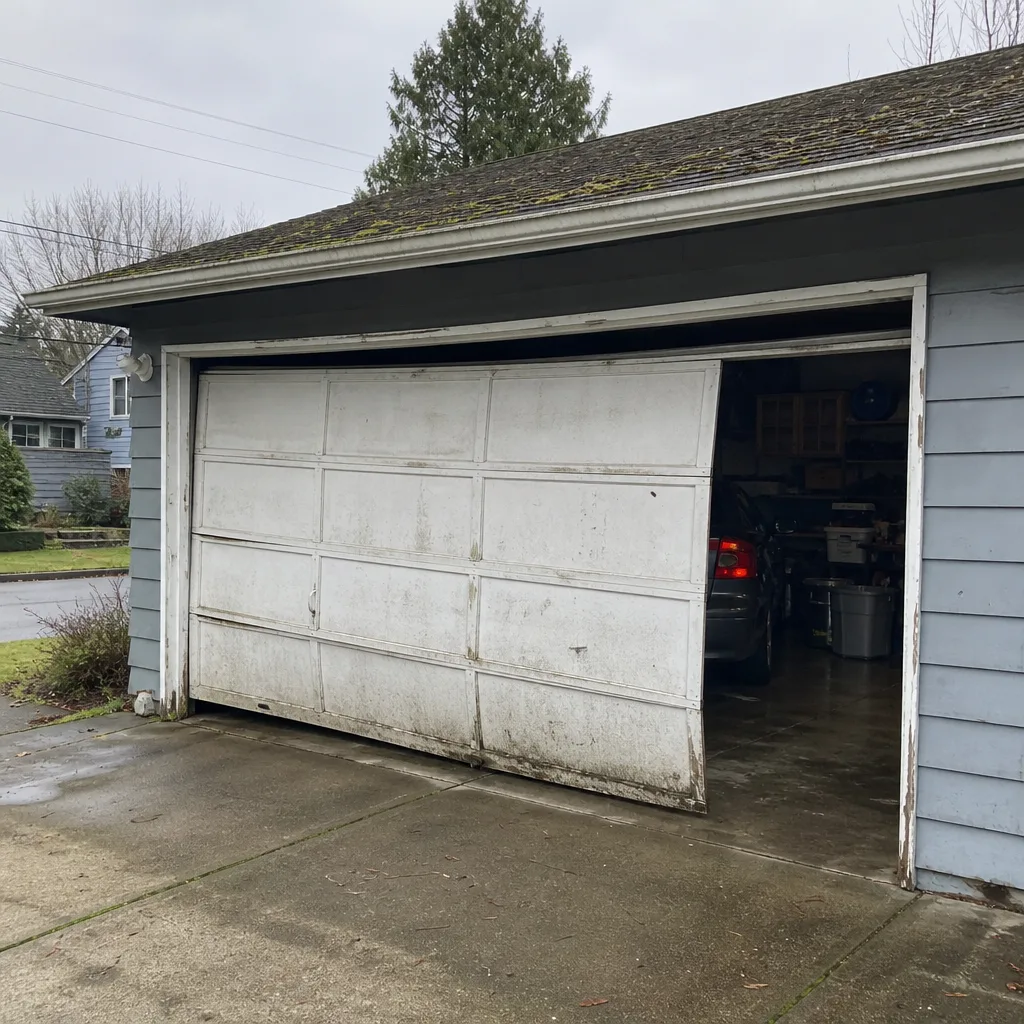
- The door hanging unevenly, one side higher than the other
- Visible damage to a spring (a visible gap in the coil, or a deformed spring)
- A door that reverses on its own low in the cycle and looks like it’s binding
These are all situations where using the door risks further damage or injury. Springs and cables are under high tension, and a second failure can happen while you’re standing under the door. Call a technician before cycling it again.
Tier 2: Book a repair within a week or two
- A grinding noise that’s gotten worse over a few weeks
- A popping sound at the start of the cycle
- A door that fails the balance test but still opens and closes
- Repeated reversing at the same spot, likely a limit switch
- Visible gaps opening up at the weatherstripping with rain forecast
These won’t cause a failure today, but they’re accelerating wear on related parts. A grinding roller that’s left alone wears the track. A binding door that’s left alone wears the opener. Fixing sooner is cheaper than fixing later.
Tier 3: Watch and schedule on your own timeline
- Faded or scuffed panels
- Minor cosmetic gaps in the side trim
- A door that’s slightly louder than it used to be but still balanced and smooth
Tier 3 items aren’t structural. They’re the stuff you notice when you’re pulling into the driveway and decide to handle next season. That’s fine. The mistake is treating a Tier 1 sign like a Tier 3 one.
Common Mistakes to Avoid
- Forcing a door that won’t open. If the door is stuck, cycling it repeatedly can snap the cable or damage the opener motor. Leave it closed until it’s inspected.
- Trying to “tighten” or “loosen” a torsion spring. Springs store enough energy to cause serious injury. Turn the door off and call a technician; this is the one job where the risk is genuinely high and the tools are specific.
- Ignoring a small pop for weeks. A popping noise is often the last clear warning before a spring fails. Booking a repair while the door still works is much easier than dealing with a snapped spring and a stuck car.
- Assuming every reversing door is a sensor problem. In Burien, we see a lot of doors that reverse because the springs are tired, not because the sensors are dirty. Misdiagnosing it means the springs keep wearing while the opener keeps fighting them.
- Skipping the quarterly balance test. It’s the cheapest way to find out your springs are losing tension. Most homeowners only run it after something breaks.
- Lubricating the tracks instead of the rollers and hinges. Tracks should be clean and dry; the rollers, hinges, and spring bearings are what need lubricant. Greasing the tracks attracts grit and makes the door louder.
- Putting off weatherstripping until water shows up inside. A floor seal is inexpensive to replace and protects the panel, the frame, and whatever’s stored in the garage. In our Burien winters, a small gap becomes a wet floor and a soft frame surprisingly fast.
- Using a general handyman for spring or opener work. Spring work involves high-tension parts and specific tools. Repairing a garage door properly means someone trained on the mechanism, the opener, and the springs as one system, which is why we stay in one trade.
When to Call a Professional
Call a professional if the door is uneven, if you’ve heard a pop or bang and the door won’t open, if a cable looks frayed or has come off its drum, if the door reverses without contact, or if the balance test fails at more than one height. Those are the situations where the fix involves high-tension parts or opener diagnostics that a homeowner shouldn’t take on. For a grinding that’s been getting worse, a door that’s louder than it used to be, or weatherstripping that’s pulling away, a scheduled visit is the right move rather than an emergency one.
Burien Garage Door Repair offers free estimates in Burien. We work on door mechanisms, openers, and springs across eight of the most common brands, so we’ll already know the typical failure points of your system before we arrive. Our technicians have up to 14 years of experience. Call (877) 619-3963 to get an estimate. We answer 24/7. Fast dispatch from 7am to 7pm, Sunday through Friday. The price is settled by a written estimate before any work begins, so there are no surprises once we’re on site.
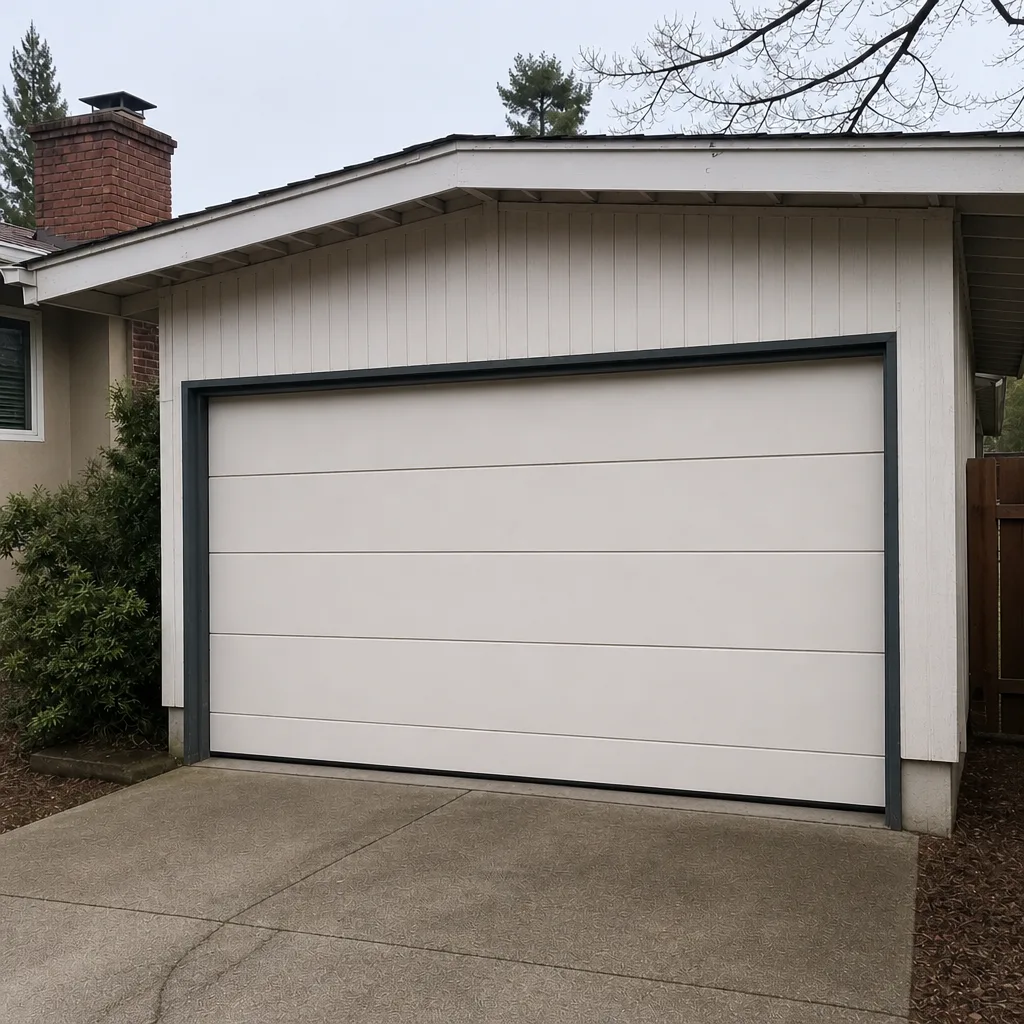
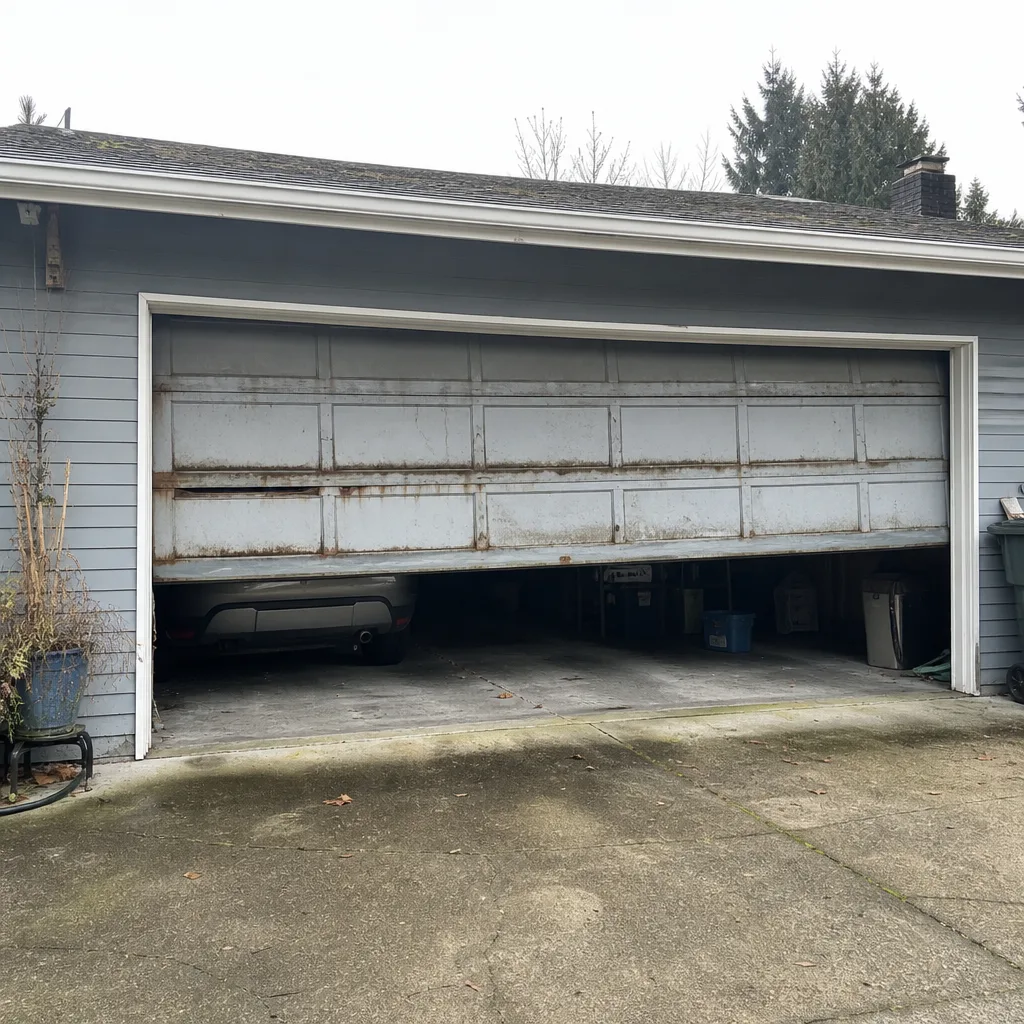
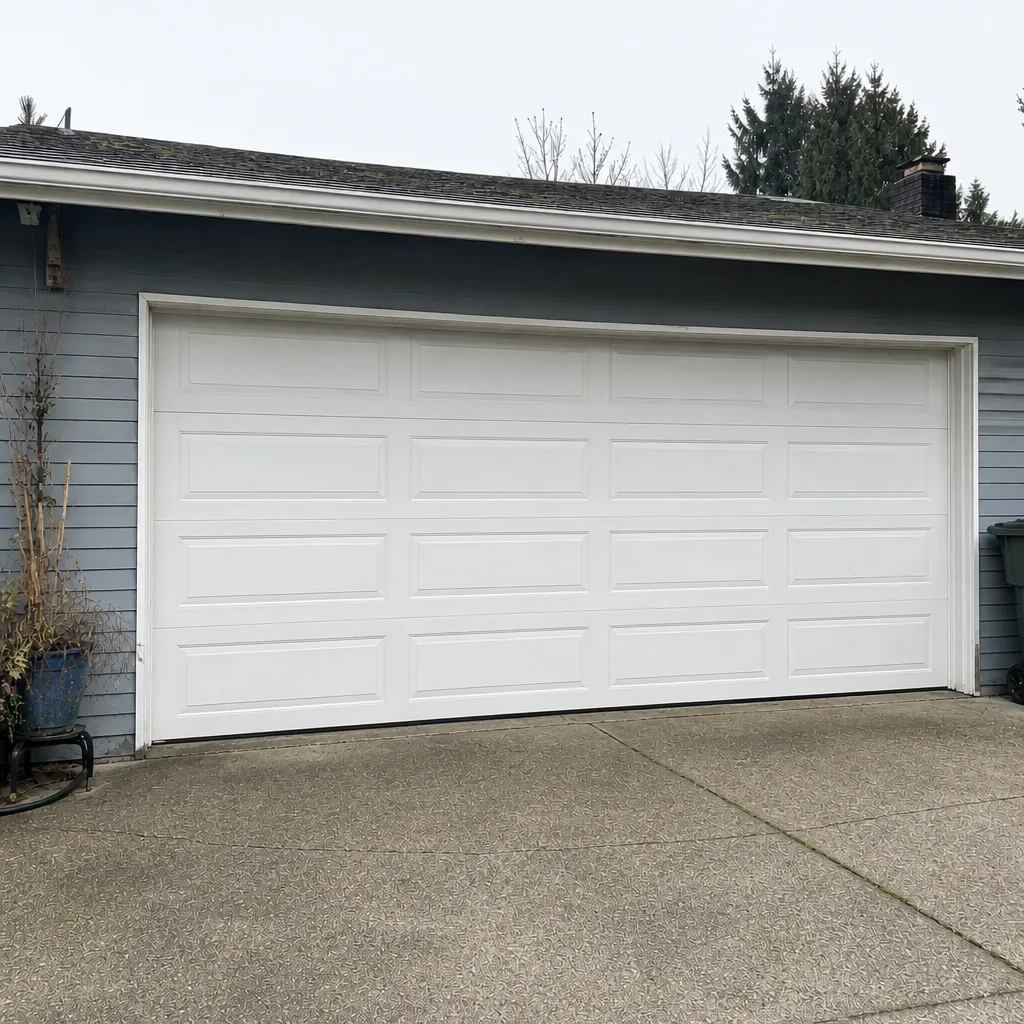
See the difference
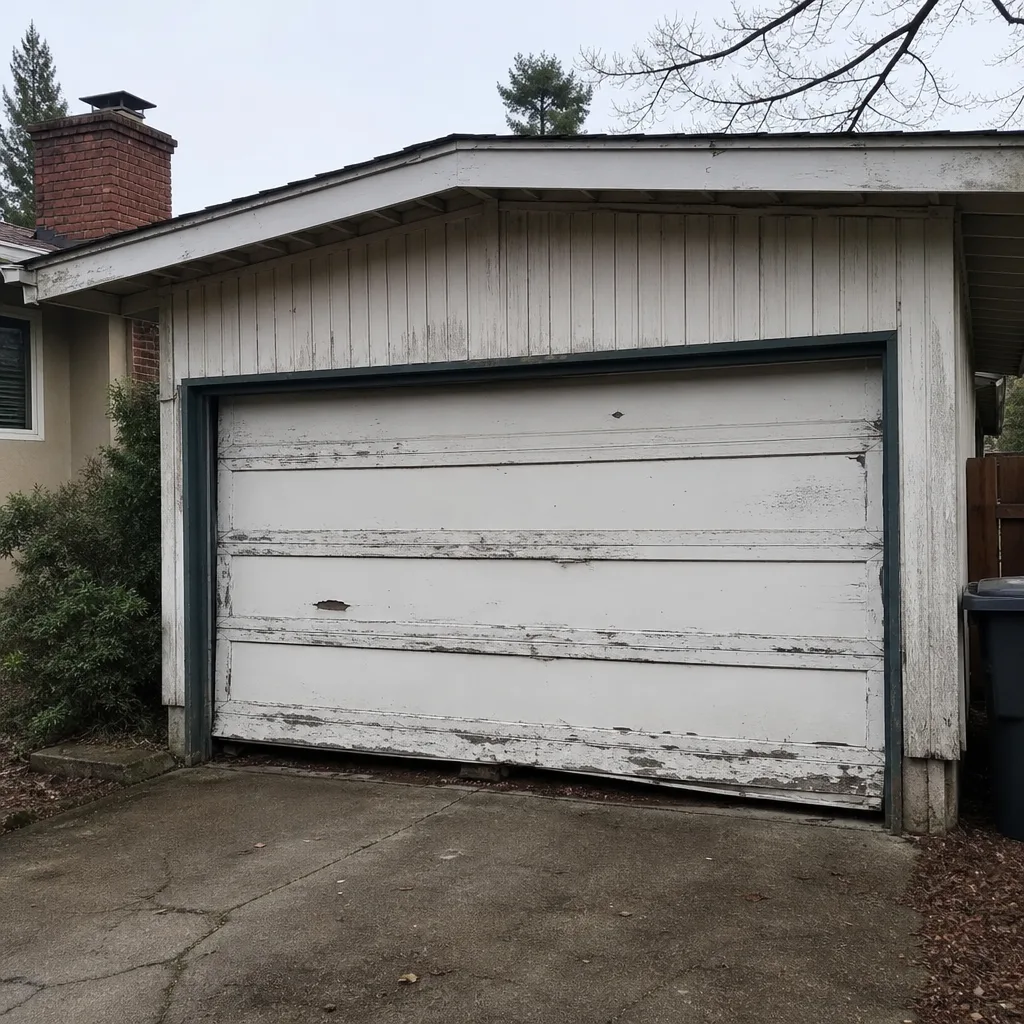 Before
 After
 Before
 After
 Before
 After
Frequently Asked Questions
Garage door repair in Burien varies by the job, and we don’t publish a flat rate. The cost depends on what’s actually failing: a roller and hinge replacement is a different scope from a spring replacement, an opener gear replacement, or a cable rebuild. The written estimate sets the price, and we agree on it before any work starts. Call (877) 619-3963 for a free estimate; we’ll give you a number based on your actual door and what we find on site.
In most cases yes, if the call comes in during our dispatch window. We answer 24/7, and fast dispatch runs from 7am to 7pm, Sunday through Friday. A call outside dispatch hours is booked into the next opening, Sunday through Friday, 7am to 7pm. We’re closed Saturday. Call (877) 619-3963 and we’ll get you on the schedule.
No, not once the estimate is agreed. We give you a written estimate before any work starts, and that number is what you pay. If we discover something on site that genuinely changes the scope, we stop and talk it through before continuing. You won’t get an invoice for a repair we didn’t quote first. Call (877) 619-3963 for an estimate.
The local professionals we connect you with are licensed and insured as their state requires. We work on garage doors only, across the brands most Burien homeowners actually own, including Chamberlain, Genie, Clopay, and Amarr. Our technicians have up to 14 years of experience. Call (877) 619-3963 to book a visit.
Usually yes. A door that reverses without touching anything is most often a sensor alignment issue, a limit setting, or spring tension loss, not a failed opener. Replacing the opener without fixing the underlying cause means the new motor will just strain against the same problem. Getting a proper diagnosis first is the cheaper path. Call (877) 619-3963 for a free estimate.
Every three months is the right cadence. Doors that get used as the main entry to the house accumulate cycles faster, so spring wear shows up sooner. The test takes about a minute and tells you more about spring health than any visual check. If the door slams or is hard to lift, stop using it and call (877) 619-3963 for a spring inspection.
The Bottom Line
Garage doors tell you what’s wrong before they break. The four main sounds map to different systems, cable fraying has clear early signs you can see from the ground, and the quarterly balance test is the single best check for spring health. Tier your concerns by urgency: anything involving a pop, a bang, a coiled cable, or a door hanging unevenly means stop and call. Weatherstripping, mild grinding, and a slightly louder door are the slow-burn items. If you’re in Burien and something on this list matches what you’re seeing or hearing, we’re happy to take a look and give you a written estimate. Our technicians have up to 14 years of experience, and we work on the brands you actually own, from Chamberlain and Genie openers to Clopay and Amarr doors. Call (877) 619-3963. We answer 24/7. Fast dispatch from 7am to 7pm, Sunday through Friday.
Written by the team at Burien Garage Door Repair.